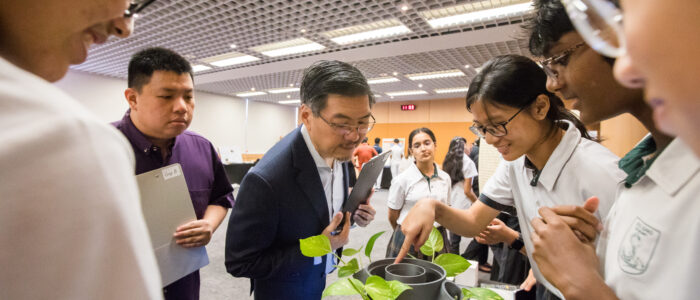
India is entering a decisive phase in its development – one where long-term growth will be determined not only by infrastructure or scale, but by skills, innovation capacity, and the quality of education delivered in classrooms today. National initiatives such as the Atal Innovation Mission reflect a clear policy intent: to seed a generation of problem solvers by equipping thousands of schools with laboratories, tools, and hands-on learning.
Yet infrastructure alone is not sufficient.
At the centre of India’s innovation ambition lies a more fundamental question: How does a nation build the innovation capacity it will need decades from now, starting with learners who are still forming how they think today?
Shell NXplorers has increasingly become a compelling part of the answer. By introducing systems thinking, creative confidence, and structured problem solving into classrooms, Shell is helping strengthen India’s innovation pipeline at its source – how young people learn to understand, frame, and solve real-world challenges.
Over the past decade, government-led education reforms have made notable progress in expanding access to experiential learning. More than 10,000 schools were equipped with Atal Tinkering Labs (ATLs) – a significant step toward democratising access to science, technology, and experimentation.
However, a structural challenge remained.
In many classrooms, the presence of tools did not automatically translate into innovation. Guided kits often instructed students on what to build rather than how to think. As a result, similar projects were reproduced year after year, with limited scope for questioning assumptions, exploring multiple perspectives, or anchoring learning in local realities.
The outcome was a paradox increasingly visible in classrooms across the country: environments rich in activity, but poor in original innovation. Students were engaged – but not always empowered to think deeply, critically, or independently.
In parallel, Shell NXplorers in India had been growing steadily – expanding from 240 schools and 19,000 students in 2018–19 to over 500 schools and 113,000 students annually by 2023.
What differentiated Shell NXplorers was not the content alone, but the mindset it cultivated. Students were encouraged to ask “Why is this happening?” before “How do we fix it?” – analysing systems, identifying leverage points, and exploring long‑term implications rather than replicating predefined outcomes.
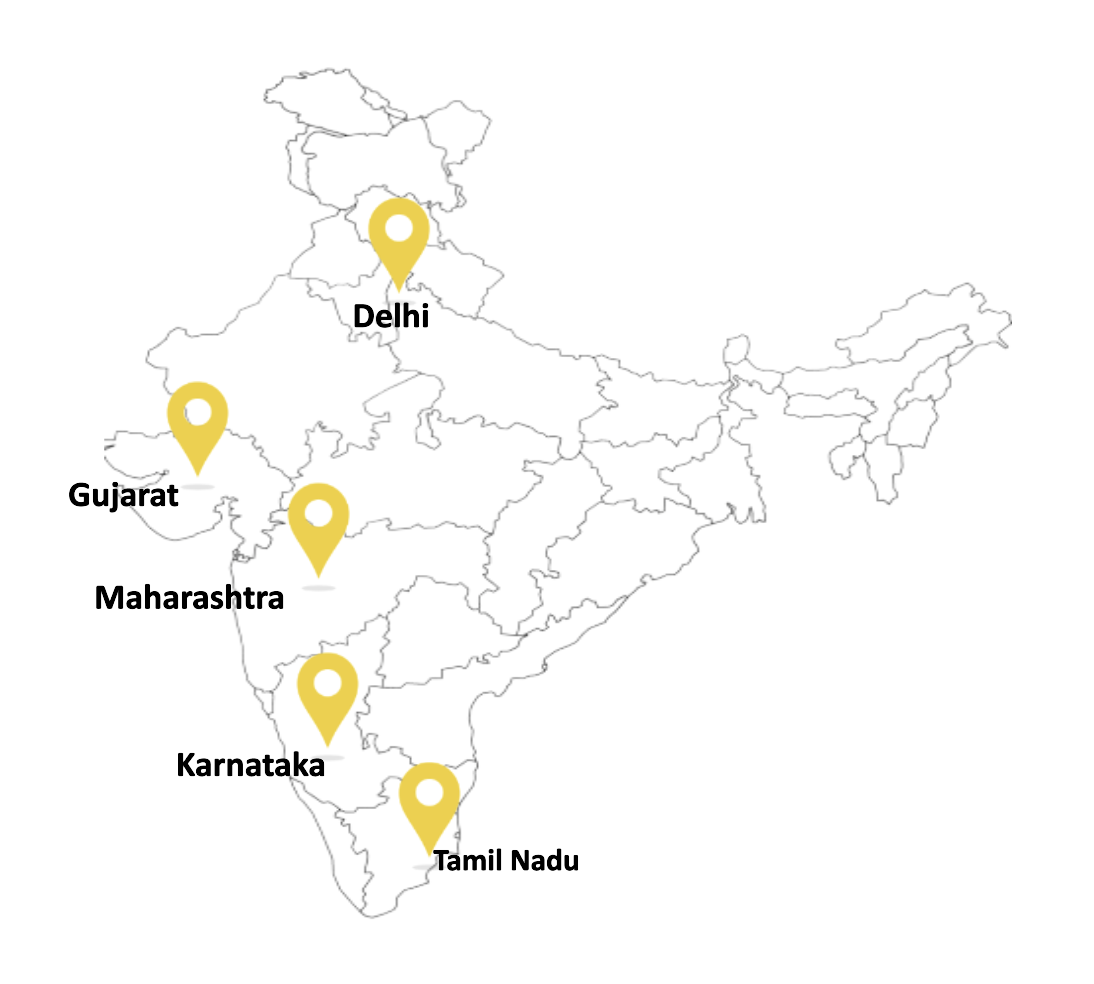
Shell NXplorers India locations
Yet with growth came a strategic inflexion point.
Within finite social investment budgets, the question shifted from “How much more can we grow?” to “How can this capability be embedded so that impact continues even when Shell’s support recedes?”
The ambition evolved from programme expansion to system sustainability – creating a model that could run with institutions, not because of Shell.
As AIM leaders observed Shell NXplorers classrooms and student projects, a clear complementarity emerged. ATLs had successfully created spaces to do. Shell NXplorers brought a philosophy of how to think. Together, they had the potential to turn activity‑rich labs into student‑led innovation ecosystems.
For Shell India, this represented more than scale – it represented scale with legitimacy and longevity. As AIM prepared to expand its footprint across thousands more schools, Shell NXplorers was well positioned to integrate into this national mission – embedding a proven innovation methodology within public education, aligned to policy priorities and institutional ownership.
In December 2023, Shell India partnered with the Atal Innovation Mission to launch a 100‑school pilot, testing whether Shell NXplorers could serve as a foundational capability framework for teachers leading Atal Tinkering Labs.
Relative to Shell NXplorers’ national footprint, the pilot was modest. Its effects were not.
What began as a test case rapidly evolved into proof of concept.
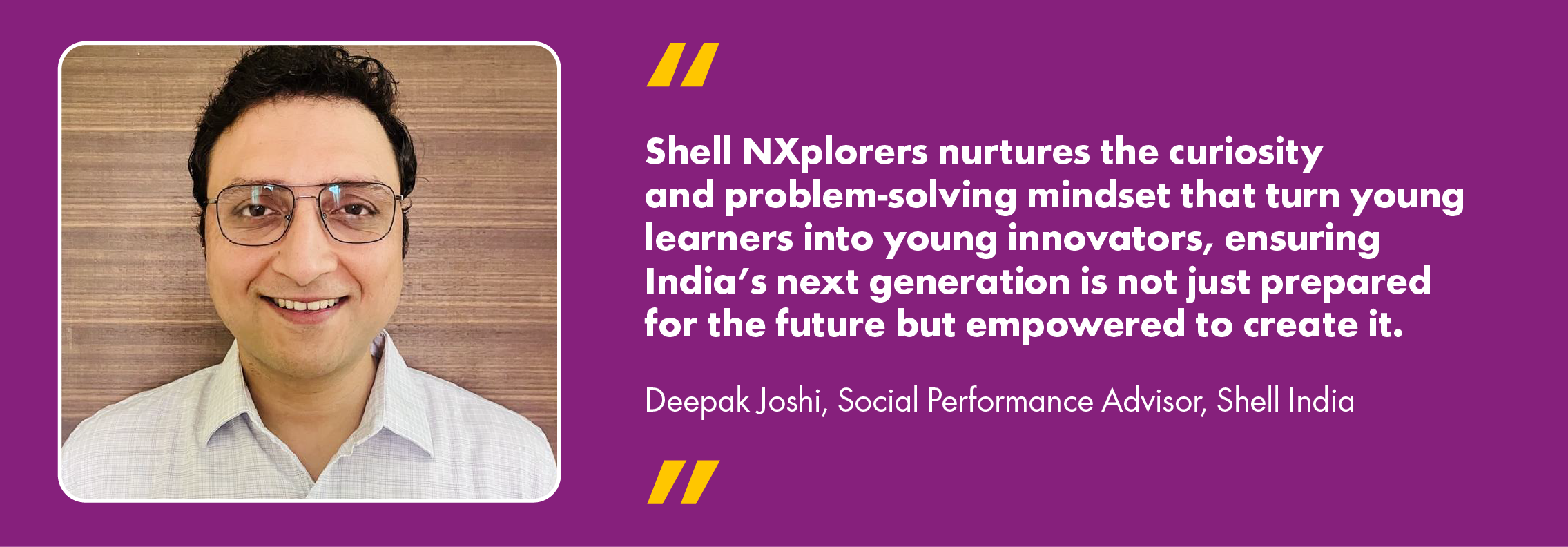
Three years into the partnership, Shell NXplorers is now active in over 400 Atal Tinkering Lab schools, catalysing student‑led innovation nationwide. More significantly, Shell has emerged as a trusted partner of choice for the Atal Innovation Mission.
With the Government of India now budgeting AIM’s expansion from 10,000 to nearly 60,000 schools, Shell NXplorers is increasingly recognised as a scalable, evidence‑based approach to building young problem‑solvers at a national scale. Together, Shell and AIM are experimenting with delivery models – blended learning, teacher‑led certification, and digital enablement – to meet this ambition without compromising quality.
This is no longer a programme story. It is becoming part of India’s school innovation infrastructure.
Behind this national journey is a story of perseverance, trust and deep partnership.
For years, Deepak Joshi and the Shell NXplorers India team have built relationships with NITI Aayog, Learning Links Foundation (LLF), state governments, district officers, principals and teachers. Scaling within India’s public education system requires thousands of conversations and countless demonstrations, and the team has consistently shown up.
Progress has not been linear or quick. But through patience, credibility and collaboration, Shell and its partners have built a shared belief in what Shell NXplorers can achieve.
In India, scale happens through people – and it is the people behind Shell NXplorers who have unlocked the pathway to 60,000 schools.
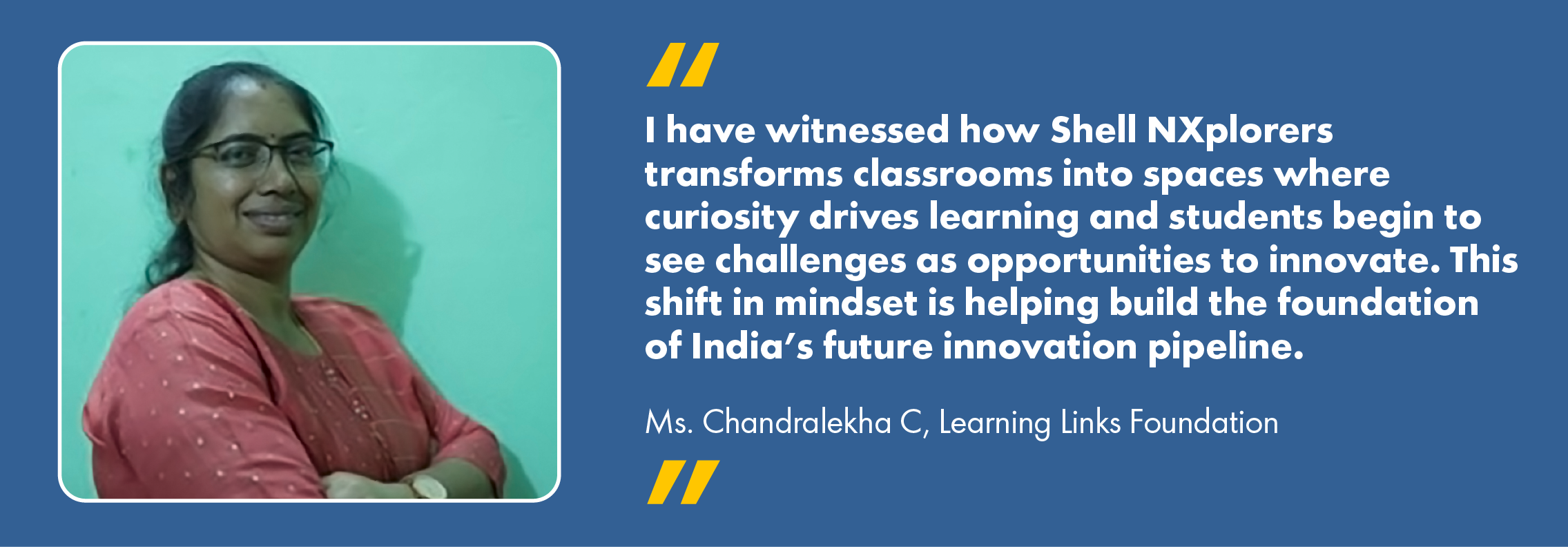
Shell NXplorers translates national ambition into classroom‑level impact through:
By investing in young learners today, Shell NXplorers is helping develop the innovators, engineers, and problem‑solvers India will rely on tomorrow.
Across urban and rural schools, Shell NXplorers is changing how young people see themselves and their futures.
Students who once hesitated to speak up now confidently present systems maps to school leaders. Girls from underserved communities are proposing new solutions for water and waste challenges. Teachers report students discussing root causes of local issues at home with their families. Some young people are even choosing engineering and environmental science for the first time.
Standout projects include:
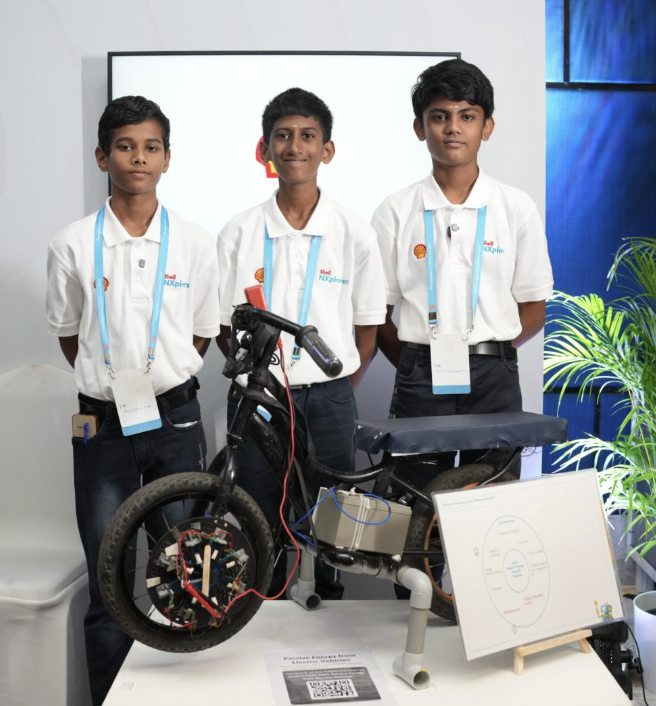
Shell NXplorers students with their project Passive Energy from Electric Vehicles
Shell NXplorers India is now a multi‑year, government‑aligned journey reaching thousands of schools and hundreds of thousands of learners. Through disciplined partnerships, evidence‑based design, and long‑term commitment, Shell is helping India build a future‑ready generation equipped not just with tools—but with the ability to think, question, and create.
As Shell NXplorers continues to scale, so too does a generation ready to shape India’s future with curiosity, confidence, and purpose.